
A 70-Year-Old Silver Surfer Scans Her Entire Life!


Theresa Wentworth describes how she scanned her entire life, scanning in nearly ten thousand photographs over the course of several years.

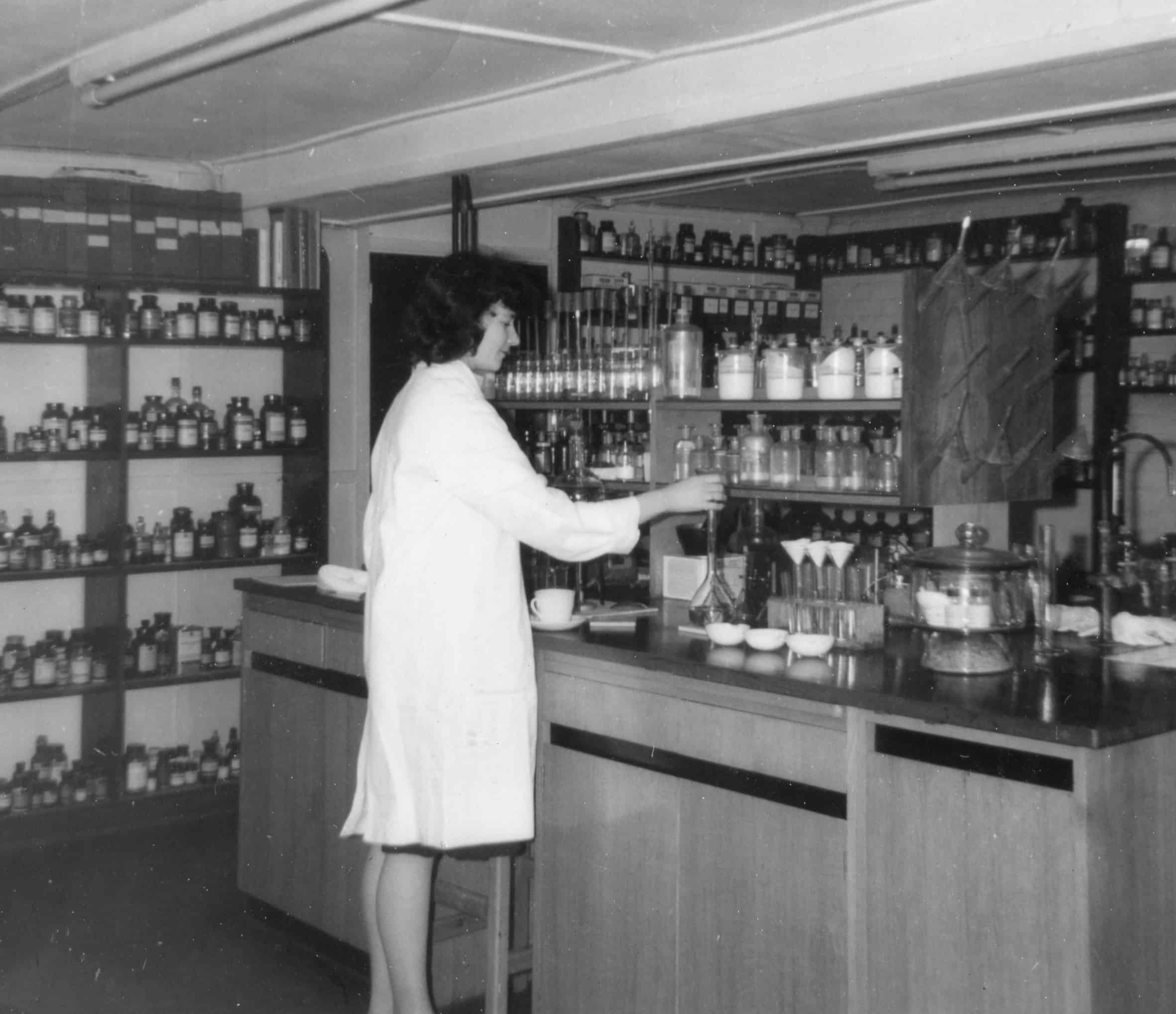
I bought my first camera in 1960. Shortly after leaving school I took a job in a laboratory, working on photographic chemicals. I was so enthralled by the idea of photography that I spent my first paycheck on a Kodak Brownie 44A camera.
I explored my home district of south Hertfordshire in England on foot, taking pictures on 127 film. I developed the negatives myself in my bedroom, with the orange streetlight outside my window performing the duty of the traditional red darkroom light.
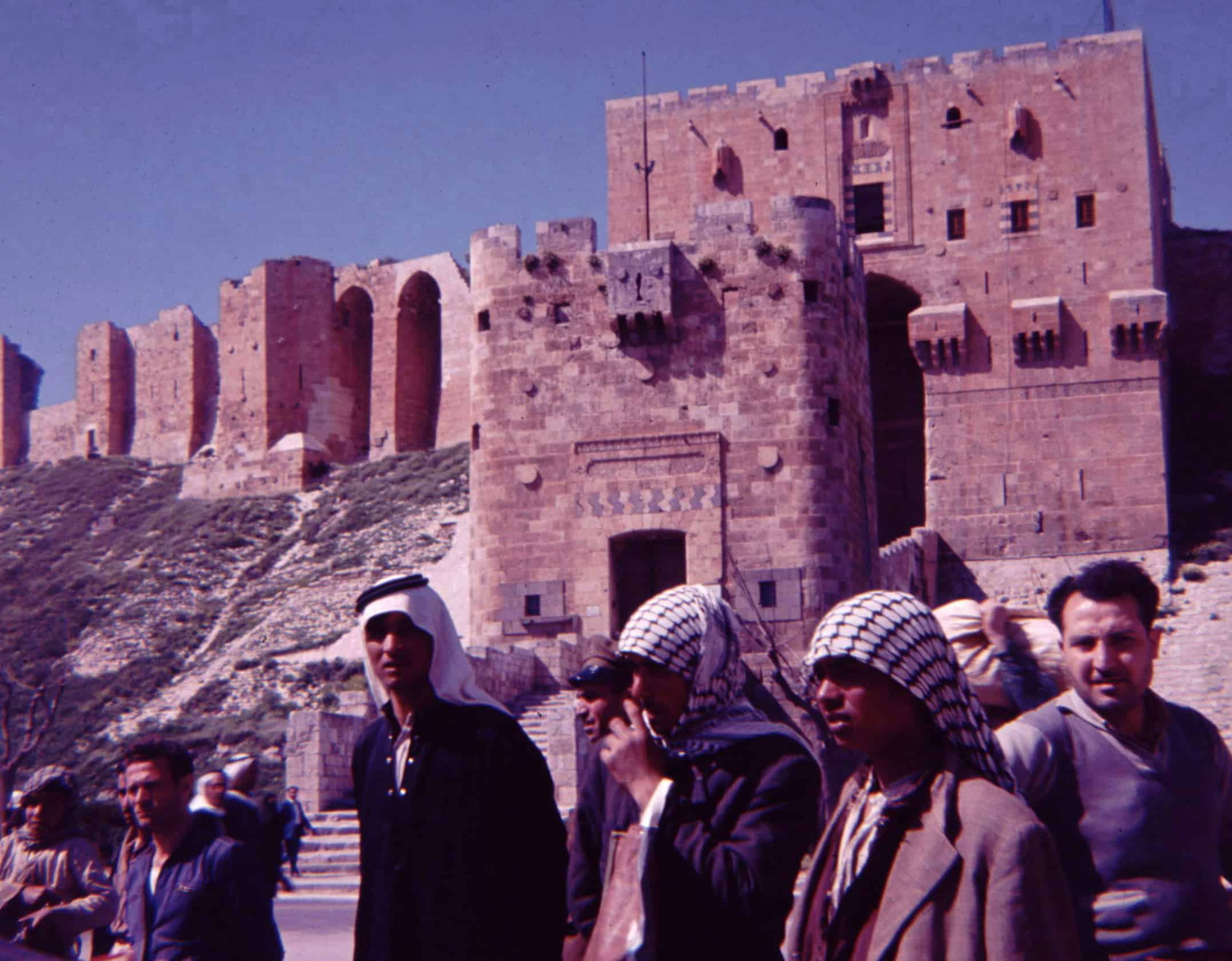
The photographic eye I developed in those early years stood me in good stead four years later when, in 1964, I took a long-distance train journey to the Holy Land. There I took several dozen photographs of a land that has endured much change and turmoil in subsequent years. That was a lot of photographs in those days.
Developing prints was expensive back then, so my pictures of the Holy Land and indeed almost all my other early pictures existed only as slides. Forty years after the trip, shortly after I had retired, my son Mark Wentworth exclaimed that it was a pity that pictures of such an extraordinary journey should languish in a box, unseen and practically unseeable: whoever heard of using a slide projector in the 21st century?


The Beginning of My Scanning Project
Being a man of action as well as words, my son Mark bought me a slide scanner and taught me how to use it. I scanned in the slides of the Holy Land without much difficulty. I was delighted to be able to view them on my computer with the same ease as I could view the digital photographs that I had started taking in 1999.

Thrilling though this experience was, it was only the start of a major retirement project. I went on to scan my entire life over the course of several years. I acquired an Epson scanner that could scan negatives and prints as well as slides and started to attack the project in rough chronological order.
The remainder of the slides came first. Then I started work on the prints in the photograph albums that I had lovingly curated over the decades. The physical albums had started to deteriorate to the extent that some of them were falling apart. Scanning the prints was an ideal way to remedy this. I also scanned in all the prints that had not made the cut for the photograph albums but I had kept nevertheless. I also spent several months scanning in approximately 4,000 negatives. All in all I must have scanned nearly ten thousand photographs in one form or another.
My son provided invaluable help. He later applied the skills we learned together to scan his own collection of 2,000 photos. (Click here to read about his entire scanning journey)

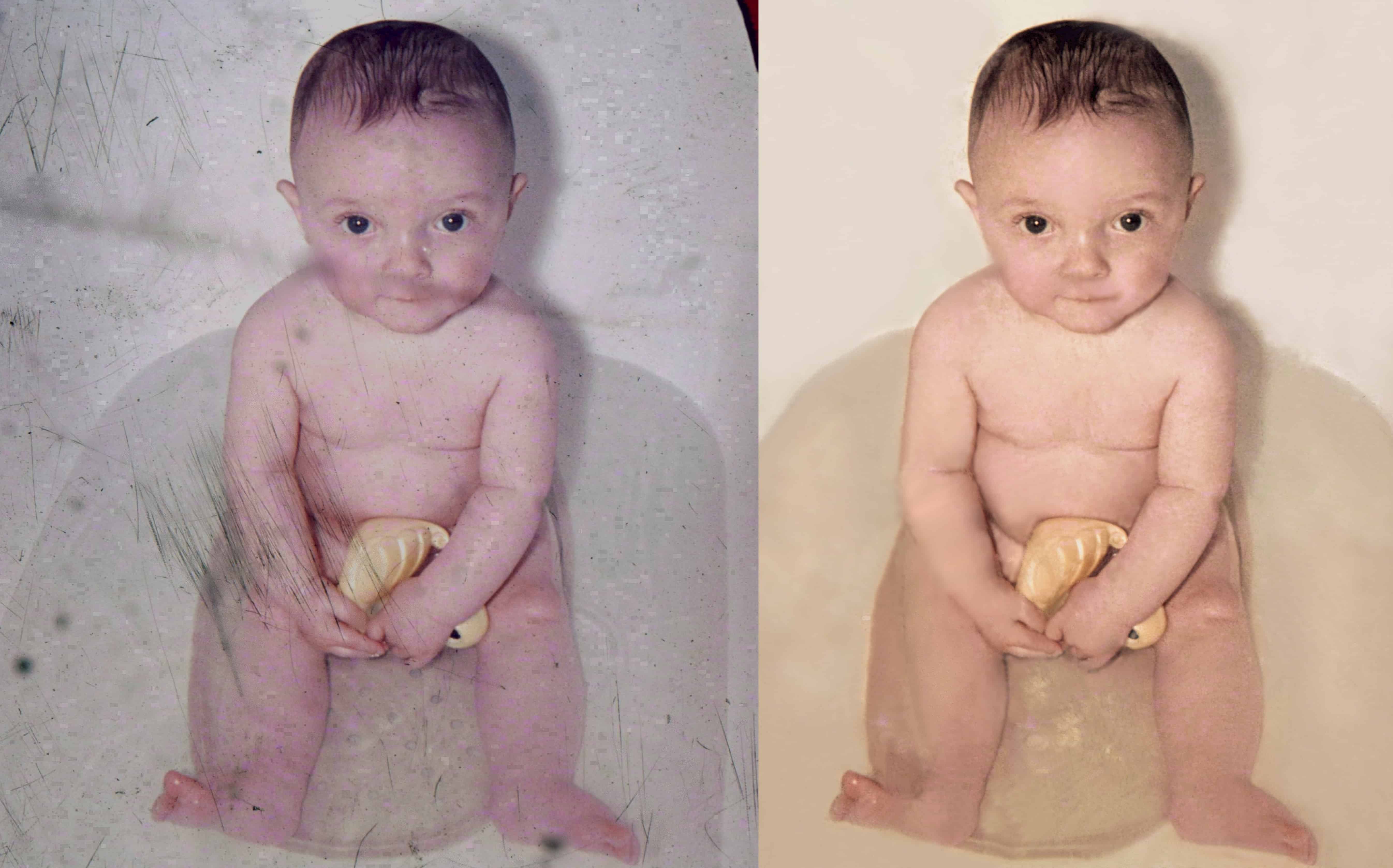
Not all of the images were in good condition. Some were in quite a poor state. This made me all the more glad that I was scanning them in: the digitised versions of the photographs would not deteriorate any further. I used IrfanView to touch up many of the scans. This worked well to remove artifacts from patches of sky and similar homogeneous regions.
However, I found it was well-nigh impossible to touch up people's faces in a convincing way. For these more challenging jobs I engaged the services of a professional toucher-upper, with whom I corresponded by email. The work he did to fix my most distressed images was well worth the modest expense.
I didn't use any special software to store the images. This was because I once suffered a frightening encounter with an early version of iPhoto, which choked on the size of my collection and for a short while I feared that I had lost everything. Fortunately this was not the case but after that I simply kept my photographs in a tree of well-named folders in Microsoft Windows.
I spent a great deal of time organising and labelling my collection but it was all very enjoyable and gave me a good reason to look at the pictures. I used the file name to write a caption for each image. Indeed, contemplating the number of photographs I had already scanned helped to motivate me to scan in more.
However, I didn't just store the pictures digitally. I also used them to create what has become my pride and joy: hardback photo books.
My Life In Hardback Photo Books
In the 1960's, only a deranged fantasist might have imagined that one day ordinary people could easily have hundreds of their pictures printed in full colour and bound into high-quality hardback books in the space of a week of two. Fifty years later this is a reality. As I completed scanning each era, I compiled the photographs into a book using software from Blurb, and assistance from my tech-savvy son.

I struggled with the idea of DPI on the scanner and frequently had to re-scan prints to get the megapixels up to a number that would fill the gloriously large 12″x12″ pages. Nevertheless, I persisted and now a few thousand of my favourite scans occupy the first half of my substantial library of photo books. These photo books have replaced the photograph albums on my bookshelves and they bring me great joy daily.
What kept me motivated over the years I spent scanning?
I didn't find the process arduous or boring but it did take a great deal of time. I needed patience and determination. The main thing that kept me going was that it was my heartfelt desire to scan my entire life. I kept imagining the reward that I'd feel at the end of all the scanning. If any readers are doubting whether it's really worth the time and effort, I can assure you that, for me at least, scanning thousands of photographs was very worthwhile indeed.
Several years on from completing the scanning project my vision is failing and I am almost blind. This makes me all the more glad that I scanned in my photographs when I could. Standard 6″x4″ prints would be difficult for me to see properly these days but scanned in and blown up to 12″x12″ in my photo books, or displayed 19″ wide on a computer screen I can see them well. My son has set up digital photo frames around my bungalow so that I can enjoy my pictures – scanned and digital – all day, every day.
However, the scanning wasn't just about me and my own enjoyment of the photographs. I view myself as the family archivist and I like to think that these scanned images will bring joy to my grandchildren. With persistence, patience and perhaps a little assistance, even the technically challenged can scan their entire life and leave a unique digital legacy.

Hey, it's Curtis here now.
I really hope you enjoyed Theresa's story. Wasn't it encouraging!? If you were moved by it in any special way, I would love for you to leave a comment below and tell Theresa and her son Mark personally what it meant to you. And maybe even what steps in your life you've decided you're now going to take! I'm sure they will be stopping by from time to time to read your personal thoughts. 🙂
Cheers! Curtis

Yes indeed, this is very encouraging. Thank-you for sharing.
I am able to sit at the desktop, for short periods of time. (surgery recovery). My first question is simply, WHERE, Do I start? Which tap on the website? Any other important “at the start gate” information would be so appreciated.
Absolutely LOVE this story. What a wonderful life, indeed. Your term “family archivist” is perfect.
Also, creating those wonderful new books from your efforts is a huge incentive going forward. The ability to hold all the work you have done in your hands is priceless. And, surprisingly today, it does not even cost that much. Lucky us !
Dear Theresa and Mark, I am so grateful to you both for taking the time and effort to share this wonderful story. I am inspired to follow your lead and get back to work on my own project. You reminded me just how important this project is and thus no more procrastination. I thank you too Curtis for all the work you continue to do. In is so valuable and much appreciated.
All The Best,
Ann
Thanks for sharing your great story and well done on getting through all the photos. Very inspiring. I am in my 50s and I’m doing the same thing with my own photos and my late mother’s photos. These photos encompass from 1920s-present. I have scanned 2600 photos, plus have 9000 photos in total on Apple Photos. I too developed black and white photos in our laundry in my teenage years. My father an avid photographer showed me how to do this and I think it led me to being a very visual person, like you Teresa.
I bought a cheap Epson V33 scanner off ebay for $60 and it has been great. I use Apple Photos for organising and I have made 30 photo books to date, earlier I used Apple Photobooks, I now use a fantastic company Bobbooks UK which has the lie flat pages and only charges 4.99GBP even to ship all the way to New Zealand! I am currently working on a family photosharing site smugmug which I hope my son will maintain after I’m gone! I use mainly apple photos for editing but find the pixelmator and macphun add ons for Photos great for restoring and improving the photos. I like your tip though to use a pro for challenging restoration jobs. I may seek one out myself.
I also like the idea to play a slideshow of the photos in the kitchen from another commenter.
Dust showing on scanned photos is one of my greatest problems, no matter how well you clean the photos it’s ingrained in some photos. I’m about to trial the Silverfast Studio software to see if that will help the situation.
I really believe like you Teresa that it will be your greatest legacy, preserving and archiving and importantly making physical photobooks for future generations. Well done and take a bow! Cheers
Can you tell me which Epson scanner you used? You mentioned it scanned photos, negatives and slides. I would like to attempt to scan my own life by now I am realizing my own mother has hundreds of thousand of photos, negatives and especially slides. She holds them tightly but I would like to sneak out a bunch at a time and scan them for her as well in order to allow her to organize them more easily into a coherent timeline of people and places. Wonderful story you are a Wonder Woman. You should find your local historical society and share this story with them. You may have a niche business you could train mature folks in.
Mark Wentworth here. The current equivalent to the scanner my mother used is the Epson Perfection V370. Scan Your Entire Life has plenty of well-written information on choosing a scanner. For such a large collection you might want to considering using a scanning service.
I’m most happy to hear you are enjoying them daily via digital photo frames. This has been the big payoff for me. I scan pictures upstairs, they go from the hard drive to icloud and then the downstairs computer in the kitchen automatically downloads them to it’s own hard drive. They are also automatically uploaded to flickr. Then I delete them from iphoto. The downstairs computer is set to random slideshow as the wallpaper, and as I work in the kitchen, or we have our dinner, we enjoy the randomness of the slideshow. There are close to 20,000 photos now, scans together with digital photos, but I’m not done scanning. Congratulations on finishing your scanning project before it was too late! A reminder to get back to it.
What an inspirational article! I love Theresa’s attention to detail and her son’s invaluable tech assistance. I started scanning a few years ago, but when life got too busy I dropped the ball. Theresa’s story gives me encouragement to charge ahead.
Very much mirrors my own experience. Luckily I only had maybe 2500 to do. Nice article.